Adding to an already life consuming career
If you read my previous post, I talked about the challenge of simply staying healthy while working in film production. That in itself can be enough of a balancing act.
Long days. Unpredictable schedules. Commutes that somehow defy the basic laws of time and distance. Craft services doing its best to convince me that so long as I add some ranch dipped baby carrot and broccoli from the veggie plate at least once between the potato chips and chocolate, then that is healthy choice
But maintaining a healthy baseline is one thing.
Training for a marathon is something else entirely.
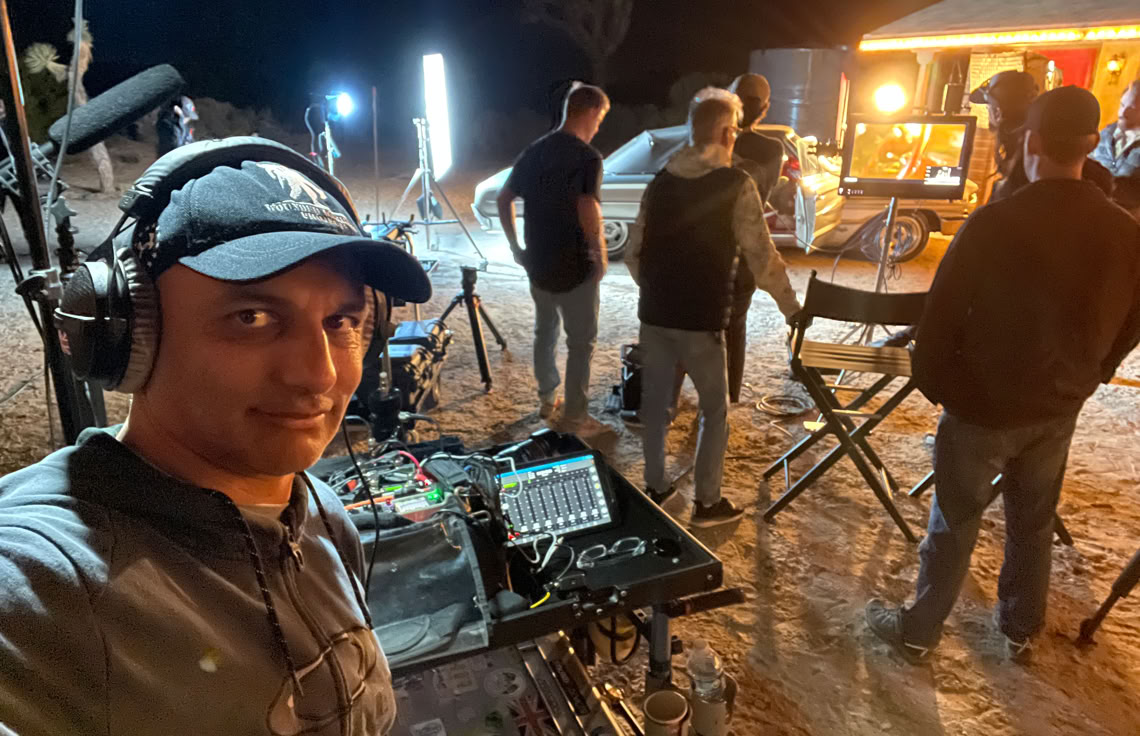
Film work can be an all-consuming career. The hours are long, the schedule can change with very little notice, and I’ve lost count of the number of times I’ve had to cancel social plans with friends and family because a shoot suddenly ran late, call times shifted, or production decided that yes, we absolutely did need “just one more setup” just an hour before I was due to go a BTS concert with my K-Pop loving partner.
So with all that, how have I managed to train for two marathons while working in this business?
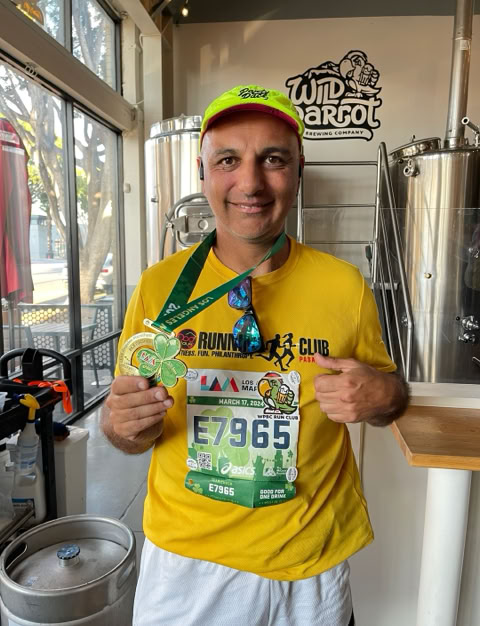
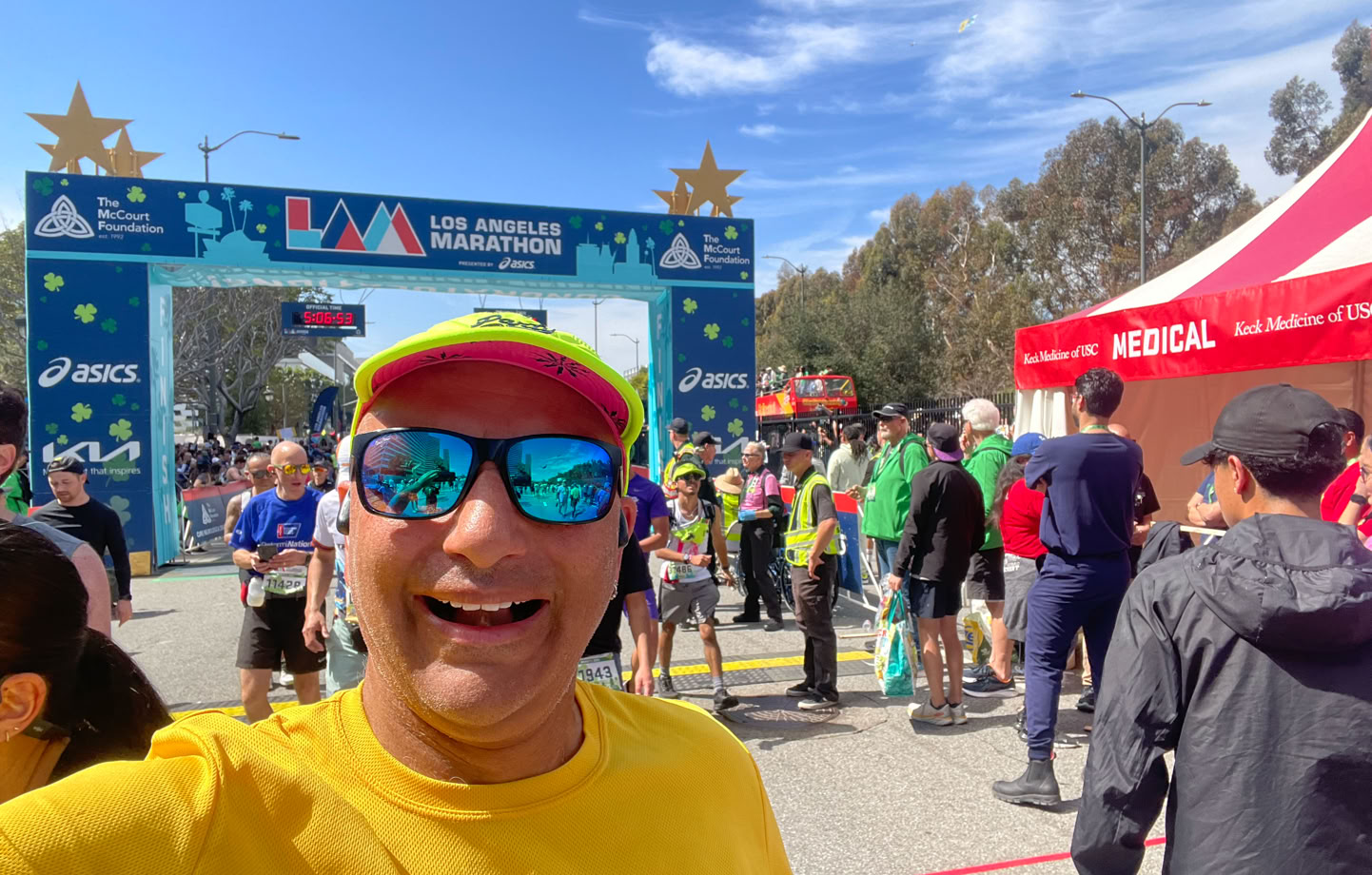
In 2024, I ran the Los Angeles Marathon.
In 2025, because apparently one level of logistical complexity wasn’t enough, I decided to run an overseas marathon in Rome.
And despite all the challenges of working in film production, I completed the full 16-week training programs that got me across both finish lines.
Somewhere between wrapping late, dodging LA traffic, and trying not to destroy my body carrying flight cases, I found a way to fit in all 26.2 miles’ worth of preparation.
Once You Sign Up, There’s No Going Back
For me, the first step is commitment.
Once I sign up for a marathon, that’s it.
There’s no casually backing out because the training got inconvenient. Training for a marathon takes serious time and energy—even if you have a regular 9-to-5 job.
Film production is rarely that accommodating.
Most workdays are 10–12 hours, often longer once you factor in the commute. The work itself can be physically demanding. Run-and-gun shoots mean carrying a sound bag all day. Narrative work might be less physically intense, but those long static hours at the cart can still leave you drained.
Then there’s travel.
Time zone changes. Airport days. Hotel living. Unfamiliar routes.
And yet, once I’ve signed up, I know the work has to happen somehow.
Because there’s something about that finish line.
That medal around your neck.
That banana they hand you as someone wraps you in a foil blanket while your legs question every decision that brought you there.
All that effort for a piece of metal, a banana, aching legs, and blisters.
You do have to be at least slightly unhinged to think that’s worth the entry fee.
Building on the Baseline
In my previous post, I talked about how I try to stay generally fit and healthy while working on set.
That intentional day-to-day discipline gives me a strong baseline.
But marathon training is another level entirely.
Especially later in a training cycle.
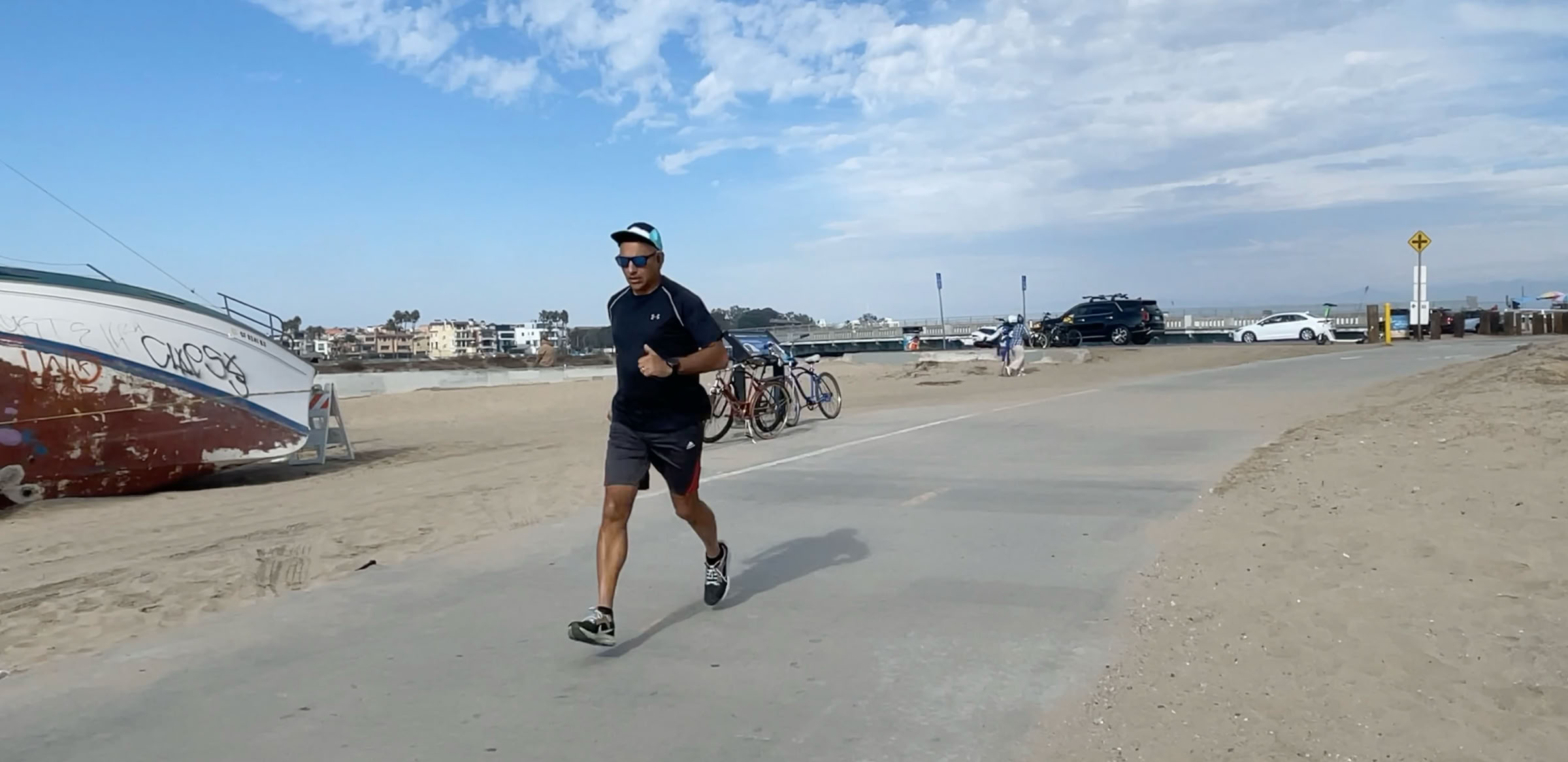
There comes a point where what the plan casually refers to as a “short weekday run” is longer than what used to be my normal long run.
And then there’s the actual long run.
Up to 20 miles.
Sometimes close to four hours.
That’s not something you casually squeeze in between wrap and dinner, especially after battling LA traffic to get home.
Flexibility Is Everything
One of the biggest lessons I’ve learned is that marathon training while working in film requires flexibility.
Ideally, I’d do my long run on Sunday. Race day is usually Sunday, so it makes sense to train your body to understand that Sunday means effort.
Film production, however, rarely checks with my training calendar.
It’s not uncommon for productions to push night shoots toward the end of the week, meaning I might wrap at sunrise on Sunday morning. Sunday shoots are also common when filming at locations that operate as businesses during the week.
And then there was the project I worked on while training for the LA Marathon that involved constant travel around the country. More often than not, Sunday was a travel day. That’s an early trip to LAX with all of the logistics I mentioned in my earlier post about the realities of film travel. Once on the plane, I had a feeling that the flight attendants at Delta wouldn't take kindly to me running up and down the aisle of their Airbus A320 for four hours, no matter how much I protested that I needed to get the miles in.
So the schedule had to adapt.
Sometimes my long run moved to Friday.
Sometimes Monday.
The point wasn’t rigid perfection.
The point was getting the work done.
Every Trip Needs Running Shoes
Travel days meant one thing:
Running gear always came with me.
The moment I got my hotel information, I’d check the map.
And not just one view.
I’d switch between street view and satellite view like I was planning some kind of highly classified operation. Street view told me whether there were actually sidewalks, paths, or somewhere that looked reasonably safe and runnable. Satellite view gave me a better sense of the terrain—whether that nice-looking green patch was actually a park, a steep hill, or some deceptively scenic patch of wilderness that would leave me halfway through a long run heading towards an alligator infested swamp.
So the things I’d look for ahead of time would be:
Was there a park nearby?
A trail?
A decent sidewalk that didn’t abruptly end at a freeway on-ramp?
Sometimes I got lucky.
Other times I’d end up in one of those airport hotels surrounded by concrete, traffic, and absolutely nowhere that looked remotely designed for human movement and so on those days the only runs I could fit in would on the hotel gym’s treadmill.
Not ideal.
But better than nothing.
I’ve learned that marathon training while traveling isn’t about ideal conditions.
It’s about consistency.
Sometimes You Just Have to Embrace the Suck
There’s no secret formula here.
Sometimes the answer is simply doing the run even when it’s inconvenient.
If that meant getting up at 4:00 a.m. to run for an hour before heading to a 7:00 a.m. call time, then that’s what had to happen. Conversely, If it meant bringing my running kit to set and heading out for 90 minutes after wrap before driving home, then that’s what I did.
Because I made the choice to sign up.
And once I’ve committed, I remind myself that nobody forced me to hand over that marathon registration fee.
This was entirely self-inflicted.
Adapting the Plan
Long runs always happened on days off, as close to Sunday as possible.
Everything else was flexible.
I’d look at the week ahead and move runs around depending on the work schedule an if I absolutely couldn’t fit everything in, I’d occasionally drop the shortest run of the week.
I tried not to do that often.
There’s a fine line between strategic adaptation and conveniently deciding that Netflix probably counts as active recovery.
Fuel Matters
Training also made me far more intentional about nutrition.
As I mentioned in my last post, film sets make unhealthy eating incredibly easy and when marathon mileage increases, so does calorie demand.
But it has to be quality fuel.
Complex carbs.
Protein.
Fiber.
Foods that actually support recovery and endurance. Sure, simple sugars have their place to provide an energy boost during a race, but a handful of Skittles from craft services is not exactly elite-level sports nutrition.
So as race day approached, I leaned more toward fruit, granola bars, and slower-burning energy sources.
Hydration is equally easy to neglect in the scramble of a busy set, but in the weeks before a race your body needs to be consistently and properly hydrated-not just on race morning.
That means a water bottle nearby at all times and a conscious effort to drink throughout the day, every day.
The Mini Workout Movement
There’s also plenty of downtime on set.
Not enough to sneak away for a quick 5K, unfortunately.
Trust me, I’ve considered it.
But enough to do something productive.
Instead of automatically reaching for my phone or wandering toward craft services, I’d sometimes find a quiet corner and knock out a few planks or dynamic stretches, just small things to maintain strength and mobility.
Funny enough, about six weeks before a half marathon, I was on a commercial where some crew members noticed what I was doing. Before long, there I was next to the sound cart doing planks with my boom op and about four grips.
Nothing says peak Hollywood glamour quite like a group plank session on a commercial set.
Saying No (Even When It’s Free)
About a month before a major race, I intentionally avoid alcohol.
I want my body at its best.
That’s usually not difficult on set itself. Productions take a very dim view of crew consuming alcohol on set and rightly so.
But occasionally production makes things interesting.
I remember being on a shoot in Park City, Utah, the week before a half marathon. We wrapped, the crew found a craft distillery, excellent food, awesome bourbons and old fashioneds all round. The producer was picking up the tab which somehow makes saying no even harder, but tempting as it was, I passed.—I ordered an Arnold Palmer (Ice tea and Lemonade) instead.
Painful? A little. Worth it on race day? Completely. There's always another shoot, another crew dinner, another producer feeling generous.
A few months later, I worked with the same crew again in New York, and the producer took us to a hidden cocktail bar, the kind of bar with no sign over the door- you had to know that it was there, like a speakeasy during prohibition times.
No race on the horizon. That time, I was very happy to participate.
Delayed gratification has its rewards.
Why It’s Worth It
In the end, it helps to start with a healthy baseline.
Training for a race is really just taking that baseline and pushing it further over a set period of time.
Working in film means I can’t always follow a training plan perfectly and that’s okay. I’ve learned not to beat myself up when I need to adapt.
The goal is progress, not perfection.
Because race day always comes.
And somehow, all those early mornings, late-night runs, and carefully packed hotel treadmill sessions become worth it.
Completing a marathon is something I’m genuinely proud of.
And in a lot of ways, it mirrors my career as a production sound mixer.
Neither happened overnight.
Both took years of effort, consistency, discipline, and plenty of uncomfortable moments where quitting would have been easier.
But with the right mindset, I’ve learned that being dedicated to my craft on set doesn’t mean I have to sacrifice goals outside of it.
It just means I have to work a little harder to make both happen.
And honestly?
That finish-line banana tastes a lot better when you know everything it took to earn it.
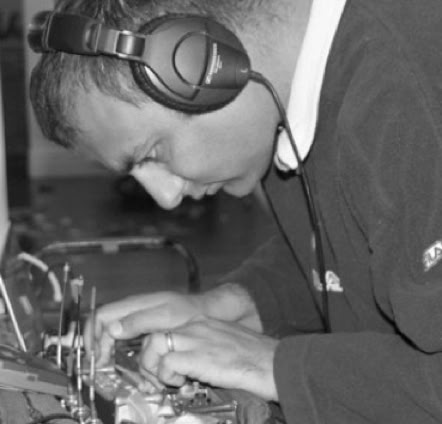
Martin Kittappa is an Emmy nominated production sound mixer and certified drone pilot with 20+ years experience working on film and TV productions around the world. A self proclaimed tech nerd. Lover of heavy metal music an avid runner, cyclist and a moderately good skier You can also check out out his YouTube Channel ‘The Full Later life’
How I Stay Healthy
In Film Production
Unexpected Adventures in
Film Production

© Martin Kittappa Production Sound 2026