How I Fell Into Production Sound (And Why It’s the Most Misunderstood Job on Set)
One of the questions I get asked most often is: “How did you get into sound?”
The honest answer?
I didn’t. It really is one of those jobs no one thinks about when dreaming of a film career. Actor? yes, Director? for sure! Cinematographer? That sounds awesome! Production Sound Mixer? What’s that now?
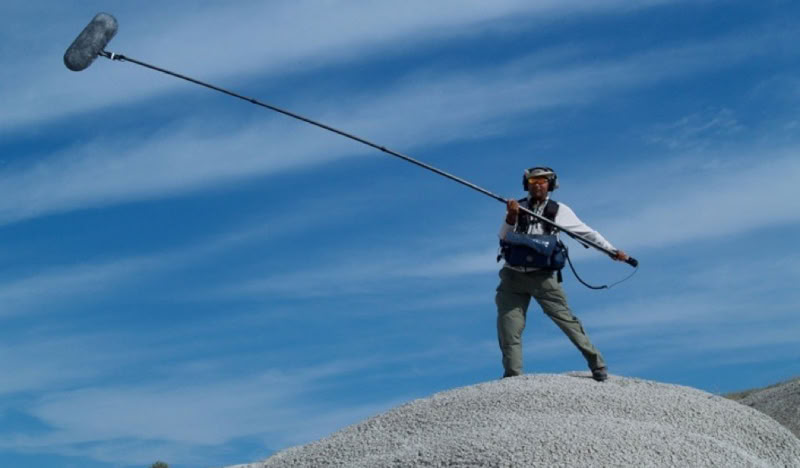
There was no grand plan. No childhood dream of booming dialogue on a windy hillside. No moment where I thought, “Yes… wireless frequencies are my calling.”
I sort of… fell into it.
The Most Misunderstood Department on Set
Sound is, without question, one of the most misunderstood departments in film production.
Every other department is focused on what happens inside the frame—that nice, controlled rectangle in the camera’s viewfinder. Sound, on the other hand, has to worry about all of that and everything happening outside of it.
The plane overhead. The dog barking three streets away. The refrigerator that suddenly decides it’s auditioning for a lead role. The HVAC system that no one noticed until you put headphones on.
If it makes noise, it’s now your problem.
And yet, production sound is usually a small, self-contained department quietly doing its thing in the corner. No one really checks in—until something goes wrong
Then suddenly everyone loses their minds.
Or worse… a mic pack appears in shot.
Film School… Didn’t Really Teach Sound
Like many people, I went to film school knowing I wanted to work in the industry—but not really knowing how.
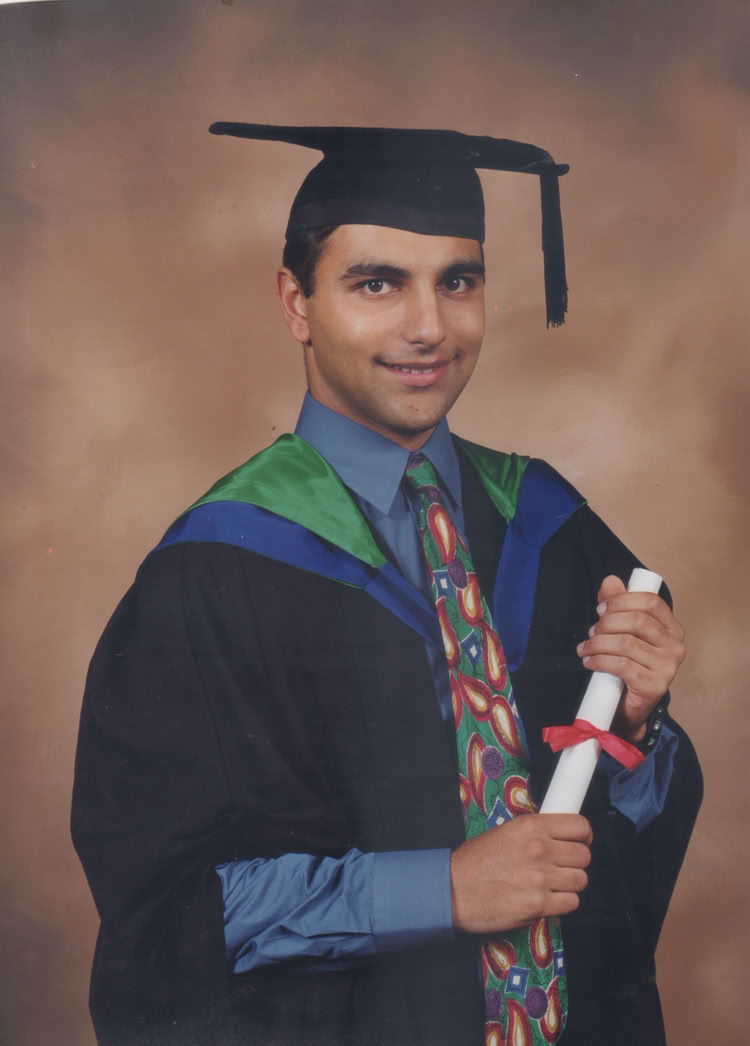
I studied Media Production at the University of Luton in the UK. I loved the technical side and thought I might end up in the camera department. I also had big ambitions—maybe directing one day. The next Kubrick- Well if you are going to dream then better to dream big.
Sound? Not even a consideration.
And in fairness, film school didn’t exactly push me in that direction.
We had multiple classes on camera. Plenty on lighting. Editing… so much editing. Sound got… one two-hour session.
Two hours.
In that time, we learned the difference between cardioid and hyper-cardioid microphones, and I think that was about it. No one explained mic vs line level. No one showed us how to boom properly. No one mentioned wiring talent, managing frequencies, or dealing with real-world locations. Nothing about HVAC noise. Nothing about traffic. Nothing about the absolute chaos that is a real set, and most importantly we were never taught how to properly wrap a cable.
Looking back, it’s amazing any of us made it through a shoot without just pointing a microphone vaguely in the right direction and hoping for the best.
The Post-Graduation Reality
After graduating, I had a degree… and absolutely no idea how to get a job. I sent my very scant résumé to every production company I could find in London. Most didn’t respond. A few sent the classic: “We’ll keep your details on file.”
Which, as we all know, is code for: “We will absolutely not be calling you.”
Meanwhile, I was working part-time at McDonald’s—and hating every second of it.
I had notebooks full of film ideas, but no way to make them. This was before smartphones, before affordable digital cameras. Everything required expensive gear, film stock, editing suites… none of which I had access to anymore.
Those ideas lived in notebooks… or on a 3.5mm floppy disk from my old IBM Pentium 486.
(If you know what that is, congratulations—we’re the same age.)
The Unexpected Break
Then one day, while volunteering at my church, I came across a flyer for a startup Christian TV channel.
I figured—why not?
Best case: I get a job. Worst case: they “keep my details on file.”
To my surprise, they actually called.
Shortly after that, I was hired… in the tape library.
Not quite the glamorous film career I had imagined.
If I’m honest, I was a little disappointed. I had hoped this would be my way onto real shoots, but the station didn’t really make content in the way I had imagined. Most of what we did was repackage existing material rather than go out and create something new.
The channel mostly aired content from U.S. televangelists, not exactly my preferred flavor of Christianity, but that is a discussion for completely different forum. My job was to log tapes, watch them through, flag anything that wouldn’t pass UK broadcast standards, and send notes to the editor.
Not exactly Spielberg-level filmmaking.
But it was a foot in the door.
And most importantly—it wasn’t McDonald’s.
Slowly Getting Closer to Set
Because the company was small (and let’s be honest, underfunded), I ended up doing a bit of everything. Coffee runs. Reception cover. Airport pickups. General “whatever needs doing.”
We did have a daily music show—essentially a Christian MTV. At first it was just back to back music videos for an hour a day (Anyone remember when MTV just showed music videos- Good times!), but eventually they decided to shoot presenter lead segments.
Once a week, a freelance cameraman named Carlos would come in to film them.
My role?
Make sure the snacks were stocked and be ready to run to the shop if needed.
But I was on set.
And that felt like progress.
Being Thrown In at the Deep End
Then came the moment that changed everything.
A major Christian band was touring through London, and the show decided to film interviews and audience reactions at the concert.
There was just one small issue.
No budget for a sound mixer.
So naturally… they gave the job to me.
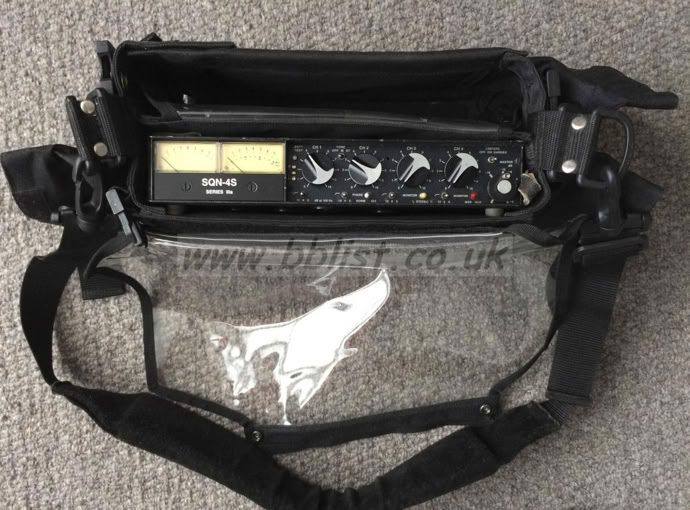
Graeme, the producer, handed me a sound bag containing an SQN-4 mixer, and said, “You’re doing sound tonight. Carlos will show you how it works.” Carlos gave me a very quick lesson—basically: “Keep the meters somewhere around here and
you’ll be fine.”
That was the extent of my training.
No pressure.
Houston…. We have a problem….
The first interview went surprisingly well. Four mics, everything sounded good in the headphones—I was feeling quietly confident.
Then we switched setups.
Handheld mic for the presenter, boom mic for everything else.
I plugged in the boom… and nothing.
No sound.
I checked everything. Turned the gain up. Wiggled cables, I may have even slapped the SQN a couple of times and tried the old switch it off and on again trick like that might magically fix it.
Still nothing.
At this point, I’m thinking: “Well, that’s it. I’m doomed to be confined to the tape library for eternity never to see a film set again”
I told Carlos the mic must be broken.
He took one look and said: “You need to turn on phantom power.”
Ah.
Yes.
Phantom power.
Of course.
The thing absolutely no one had ever mentioned in film school.
Learning the Hard Way
The rest of the shoot was… eventful.
Managing cables while tethered to the camera. Trying not to trip members of the public. Watching levels while moving through a crowd. Hoping nothing else mysteriously stopped working.
It was chaotic.
It was stressful.
And I absolutely loved it.
The First Feedback
The next day, I dropped off the tapes we had shot to the editor and went back to the tape library to deal with whatever Fedex had delivered to me to log. That afternoon, the editor called me into the edit suite.
Naturally, I assumed I had completely messed everything up. Why is he calling me in?
Instead, he just wanted to show me the cut and he said the audio was usable. A few peaks here and there, nothing distorted. A slightly visible mic cable in one shot—but overall, solid for a first go.
Not perfect.
But not a disaster either.
Which, at that stage, felt like a huge win.
Falling Into a Career
After that, whenever they needed someone for sound—usually once a month—I became the guy.
Not because I planned it.
Not because I trained for it.
But because I said yes… and somehow didn’t completely mess it up.
The unplanned path
Looking back, that experience taught me something important.
Production sound isn’t just “point a mic and press record.” It’s technical, it’s creative, and quite often it’s problem-solving under pressure—usually while everyone else is focused on something else entirely.
It’s also a department that most people don’t fully understand… until something goes wrong.
I didn’t set out to become a production sound mixer.
I fell into it.
But sometimes, that’s exactly how you end up where you’re meant to be.
And all these years later, I’m still learning, still adapting—and still making sure that whatever chaos is happening on set…
At least it sounds good.
Martin Kittappa is an Emmy nominated production sound mixer and certified drone pilot with 20+ years experience working on film and TV productions around the world. A self proclaimed tech nerd. Lover of heavy metal music an avid runner, cyclist and a moderately good skier You can also check out out his YouTube Channel ‘The Full Later life’
© Martin Kittappa Production Sound 2026