From First Break to Freelance: Building a Career in Production Sound
If you read my previous post, you’ll know how I ‘accidentally fell into production sound’. That first experience—being handed a mixer and told to “keep the levels in the right place”—was really just the beginning.
As it turns out, falling into sound is one thing. Building a career out of it is something else entirely.
A Foot in the Door… But Not Much Else
Looking back, I’m genuinely grateful for my time at that small Christian TV channel. It gave me my first real opportunity to work with sound and get onto something resembling a set.
But if I’m being honest, I probably wouldn’t have stayed on that path if I had remained there long-term.
The reality was, the channel didn’t produce much original content. Most of what we did was repackage existing material. Apart from the occasional music show shoot, I was mostly logging tapes and doing whatever jobs needed doing.
It was a start—but it wasn’t a future.
Teaching Myself the Craft
Since I was being asked to run sound about once a month, I figured I should probably learn what I was actually doing.
A novel concept, I know.
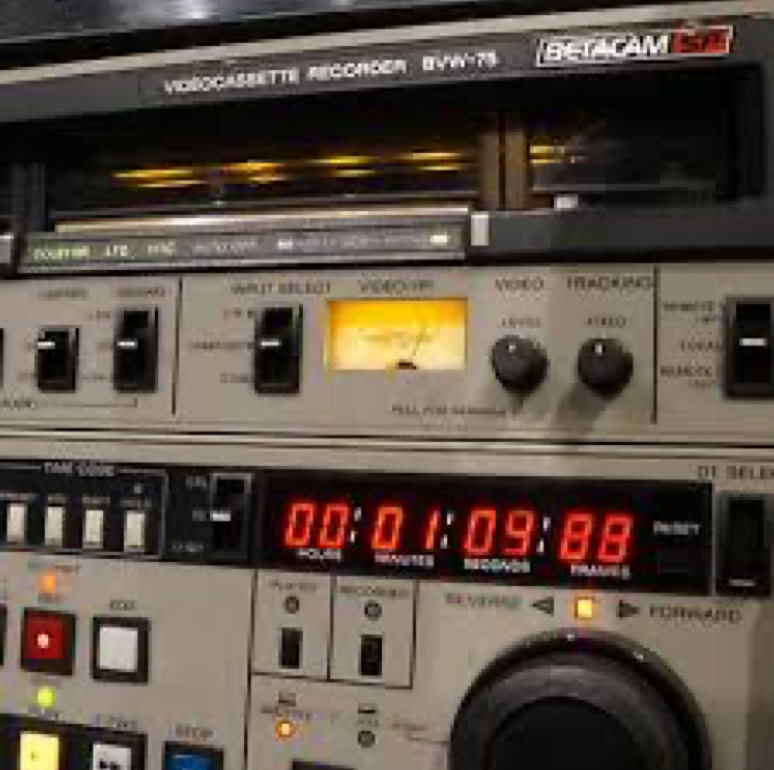
At the time, I was working with a fairly simple setup—an SQN-4 mixer feeding into a Betacam SP camera. My first step was to understand every single switch, dial, and setting on that mixer.
The “phantom power incident” on my first shoot had made one thing very clear:
I didn’t know nearly as much as I thought I did.
So I started reading. ….A lot.
This was before YouTube tutorials, online courses, and forums. Back then, the internet wasn’t really a learning tool—it was something you saw in films like WarGames, usually moments before someone accidentally triggered a global catastrophe.
So books became my teachers. I studied microphones. Signal flow. Gain structure. Anything I could get my hands on. There wasn’t anyone at the channel who could really teach me—aside from the occasional freelance cameraman—so I had to figure it out myself.
Trial, error… and the occasional mild panic.
Knowing When It’s Time to Move On
After about three years, the decision to leave was more or less made for me.
The network decided to relocate to the north of England, far from the production hubs of London. At the same time, I had hit a plateau. I wasn’t getting any closer to the kind of work I actually wanted to do.
At one point, the CEO even asked if I wanted to become his personal assistant. For a brief moment, I considered it. There was travel involved—something I’ve always loved. But the more I thought about it, the more I realized it would take me further away from film sets, not closer.
Also, deep down, I knew I probably wasn’t destined for a career in organizing someone else’s calendar. And if I’m being completely honest, I also had some personal reservations about the direction of the network and the type of content it focused on.
So I made the decision to leave.
I stayed on just long enough to help with the move and train my replacement. Then, like many people trying to break into the industry…
I was on my own.
The Freelance Reality
Freelancing at the beginning is not glamorous. It’s a mix of occasional film work… and a lot of everything else.
Temp jobs. Gaps between shoots. Constant uncertainty and a lot of explaining to friends and family that yes, this is a real career path.
One of my first freelance sound jobs came through Carlos—the same cameraman who had shown me the basics. It was a low budget TV drama for a Middle Eastern network.
And for the first time, I was working on a narrative project.
I even had a boom operator.
That alone felt like a promotion.
Learning on the Job (Again)
The problem was—I had never actually done this kind of work before.
Up until then, my experience was mostly interviews and simple setups. Now I was dealing with actors moving through scenes, changing levels of dialogue, multiple characters talking over each other, camera movement, lens changes… all the things that make narrative sound both challenging and, at times, mildly terrifying.
I had to learn how to properly hide lav mics. How to mix dialogue dynamically. How to adapt in real time.
In short—I had to figure it out as I went.
Again.
It was long hours, low pay, and a crew made up largely of recent film school graduates. But there was something special about that set. The camaraderie. The shared struggle. The sense that we were all just trying to make something work with what we had.
And somehow… I did make it work….
Well I didn’t get fired.
Which, at that stage of my career, felt like a glowing performance review.
The First “Real” Job
For the next few years, that was my life—small jobs, gaps between work, figuring things out as I went.
Then came my first major TV job.
A month-long documentary shoot about train crashes for a British TV Network.
Not only was it my first project that would reach a wide audience, it was also my first travel job.
Suddenly, I was being paid to fly across Canada and the United States, stay in hotels, and record sound.
Not bad for someone who had recently been working in a warehouse wondering if I’d ever get back on set.
The shoot itself was fairly straightforward—interviews and B-roll—but it was a small crew, so I wore multiple hats. Sound, some lighting, even driving the rental minivan- On the wrong side of the road…
Which, it turns out, is just as stressful as mixing audio—just in a completely different way.
And honestly? I loved it.
Being part of the whole process, not just one small piece of it, was incredibly rewarding.
The Gear Problem
There was one major hurdle though.
I didn’t own any equipment.
And in those days, that was a problem.
There wasn’t much in the way of affordable “prosumer” gear. You either had professional-level equipment—or you didn’t get hired.
Some productions would rent gear, especially on lower budget projects, but most expected the sound mixer to show up fully equipped.
At that point, I simply couldn’t afford it.
Professional sound gear isn’t exactly an impulse purchase.
A Detour That Helped More Than Expected
Eventually, things got tough enough that I stepped away from the industry for a while.
I trained and worked as an EMT for a few years.
Around this time, many of my college friends were settling into stable careers, earning good salaries, and generally looking like they had life figured out… while I was bouncing between freelance gigs and wondering if I’d made a series of very questionable life choices.
It wasn’t the plan—but it turned out to be one of the most valuable experiences I’ve had.
It taught me how to stay calm under pressure. How to think logically in high-stress situations. How to deal with all kinds of personalities.
Skills that, surprisingly, translate very well to a film set.
The main difference being that on set… the blood is usually fake.
…..Usually.
Still Connected to Film
Even while working as an EMT, I stayed connected to the industry where I could.
I picked up occasional sound jobs, and sometimes worked as a set medic on larger productions—including high end BBC dramas and films like Casino Royale and some of the Harry Potter movies.
And thanks to having a steady income for the first time in a while, I was finally able to start investing in my own sound equipment.
That, more than anything, changed the trajectory of my career.
Turns out, owning the tools of your trade helps.
The Next Chapter
Five years later, life took another turn.
I handed in my notice with the Beds and Herts Ambulance Service.
Packed up my life.
And moved to Los Angeles.
To pursue freelance production sound mixing full-time.
No pressure.
The long Winding Road
Looking back, there was no straight path into this career.
No clear roadmap.
Just a series of opportunities, challenges, wrong turns, and moments where I had to figure things out on the fly.
But every step—every struggle, every side job, every unexpected detour—played a role in getting me here.
Because building a career in production sound isn’t just about knowing how to record clean audio.
It’s about persistence.
Adaptability.
And being willing to say yes… even when you’re not entirely sure what you’re doing yet.
(Especially back then.)

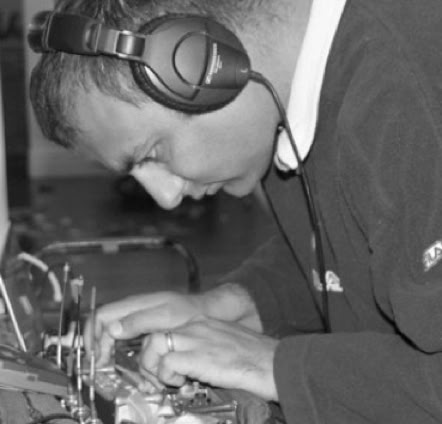
Martin Kittappa is an Emmy nominated production sound mixer and certified drone pilot with 20+ years experience working on film and TV productions around the world. A self proclaimed tech nerd. Lover of heavy metal music an avid runner, cyclist and a moderately good skier You can also check out out his YouTube Channel ‘The Full Later life’
How I accidently fell
into sound
How I stay Healthy
In production
© Martin Kittappa Production Sound 2026