It’s not your regular 9-5, but that’s ok.
There's a conversation I have with myself every now and then — usually during the slow stretches between jobs when the phone isn't ringing, the bank account is sending me passive-aggressive signals, and my university friends are posting photos of their kitchen renovations funded by their very reliable, very regular paychecks.
In my line of work as a production sound mixer, the schedule is unpredictable by design.
The income is a boom-and-bust rollercoaster that renders every "5 steps to financial freedom" video on YouTube completely useless to people like me. I've watched those videos. I've tried to apply the logic. It doesn't translate, at least not easily.
And yes — there are mornings, usually during a slow stretch between jobs, when I think about those university friends who took the stable road and the regular income. There is something undeniably appealing about knowing exactly what Tuesday looks like, and knowing exactly when paychecks will be deposited.
But I also know myself well enough to admit that I'd be climbing the walls within a month.
We're all wired differently, and thank goodness for that — the world only works because different people are drawn to different things.
Some careers simply can't be 9-to-5, 48 weeks a year
Film is one of them. Once the show wraps, it's wrapped. No studio is going to keep a crew on retainer to sit on an empty sound stage watching the clock, waiting until the next show is greenlit.
That's just not how any of this works. It’s just the way it is and I made my peace with it a long time ago.
Because here's what I know with absolute certainty:
I have one of the coolest jobs in the world.
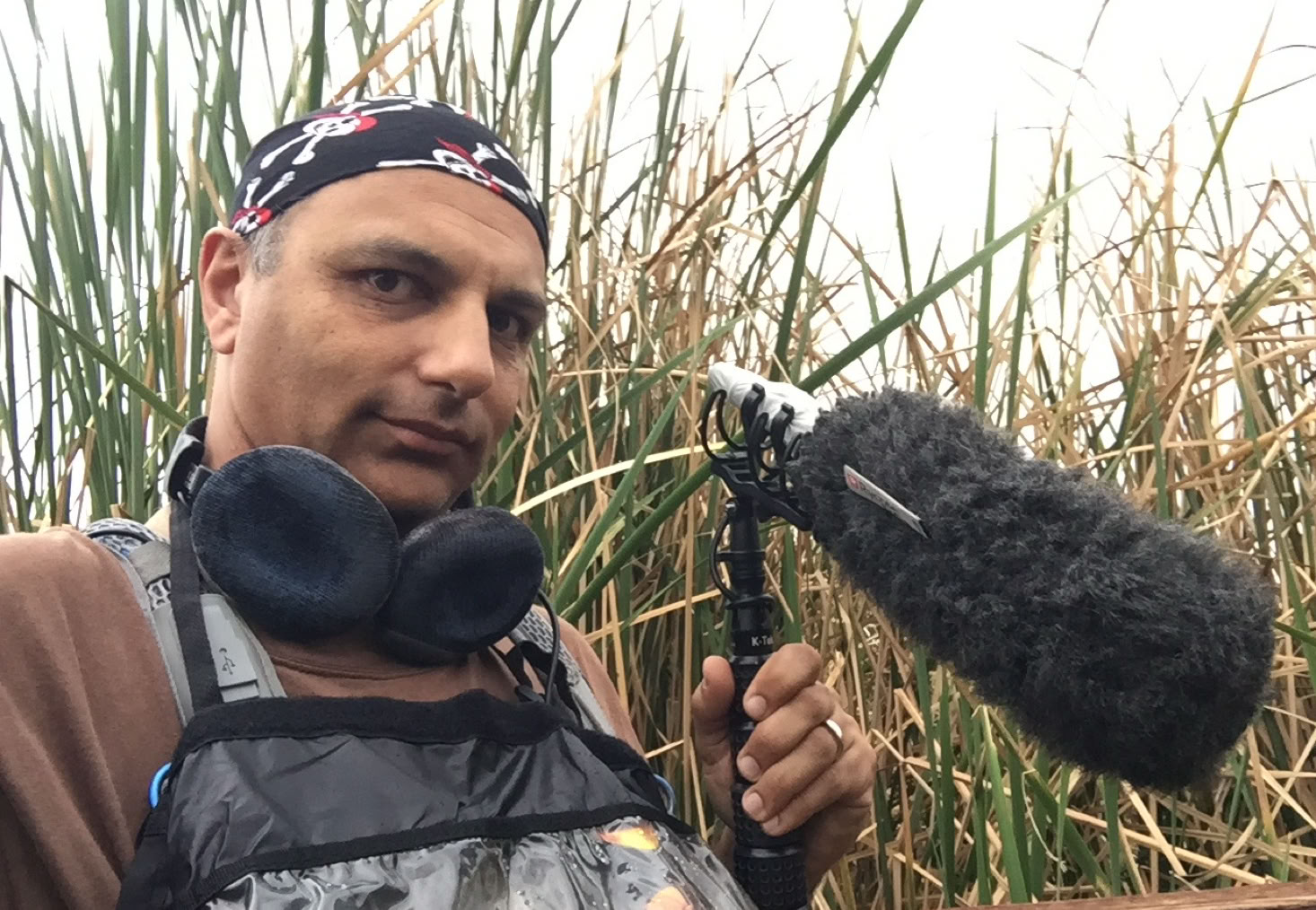
The Book I'll Probably Never Write (But Should)
My wife said something to me over breakfast recently. I was telling her about a particularly interesting shoot I'd just wrapped and she looked at me and said, "You need to write a book about all the things you've seen."
Maybe one day.
Now I could mention various celebrities I’ve worked with over the years, and while I absolutely appreciate and feel privileged to have worked with many incredibly talented people, that’s honestly just part of the job in this industry. Friends and family are often fascinated by the A-list talent I’ve crossed paths with, but many of the shoots that have impacted me the most, and that have the most meaning to me had very little to do with celebrity culture.
Here are a few examples.
Hyundai. Alabama. A car being born.
I spent a full day inside a Hyundai manufacturing plant filming an extended commercial for a new model launch. We followed rolls of sheet metal from the moment they arrived on the factory floor, all the way down the production line, until it morphed into a car that drove out the other end and into the parking lot — ready for a truck to take it to a dealership somewhere in America.
The whole process, minus the paint shop, took less than a day.
Most people will never get access to see that.
I was there with my recorder, capturing every sound along the way.
Sky Brown. An indoor skate park. A masterclass in how champions are made.
I once had the privilege of spending a day filming British Olympic skateboarder Sky Brown as she developed new tricks ahead of competition.
What made it extraordinary wasn't just watching her skate — it was watching her process. The planning. The repetition. The falls.
In competition, a fall is failure. In training, every fall is research. Each one building the muscle memory to execute something no one has done before. It was fascinating. It was also strictly confidential — I signed an NDA. The competition or anyone outside of her immediate team doesn't get to see what she's working on.
But I did.
I'll freely admit I know absolutely nothing about skateboarding beyond the fact that it's great to watch, so I wouldn’t have been able to meaningfully break the NDA even if I wanted to, and any professional knows that this something you just don’t do if you want to get hired again. But I walked away from that day with a genuine respect for what elite athletes put themselves through behind closed doors.
Three days skiing Aspen. On the clock.
One of my clients is the Wounded Warrior Project. We were filming an adaptive sports clinic for injured veterans. Since the activities were on the mountain, the whole crew had lift passes for the Aspen ski resort in Colorado, and we brought our skis and snowboards to get around the mountain. The clinic was intense, but it wrapped at lunch each day.
Which left me with a lift pass, my skis, a free afternoon, and access to the slopes of one of the most expensive ski resorts in the world.
I was being paid to be there.
A World War One machine gun. Post-wrap.
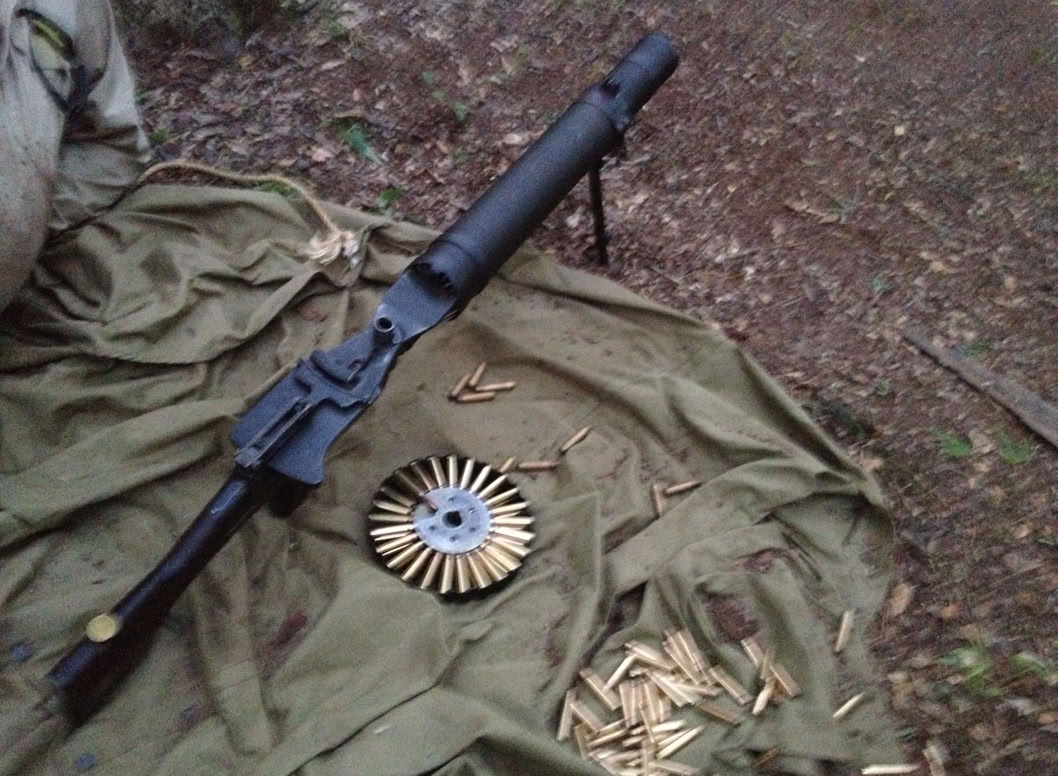
Another memorable documentary shoot was about historic weapons of war, after we wrapped the owner of the collection asked if anyone wanted to fire a Lewis Gun — a British WWI machine gun, still fully operational, lovingly maintained by a weapons enthusiast in Oklahoma who'd opened his collection to us for the film.
Of course nobody refused.
I'm not especially into guns myself, but I challenge anyone to turn down the chance to fire a piece of living history like that.
I'd wager that even the most committed firearms enthusiasts haven't had the opportunity to pull the trigger on something that was actually on a battlefield in 1917. Now that’s a story
And now I have that story.
Three days embedded with the MESA police helicopter unit.
I was hired specifically because I carry a specialty cable that connects my recorder directly into a helicopter's comms system.
Three days. Multiple flights. Most calls were routine — traffic accidents, aerial surveillance on minor arrests.
Then two calls came in that were anything but.
The first: a nighttime search of the Arizona desert for a missing person believed to be suicidal.
The second: first response to a domestic standoff that sadly escalated into an officer-involved shooting.
Our helicopter was the first unit on scene, which meant the officers we were filming with became the command-and-control center for the entire incident until a mobile command unit could be established on the ground. After that, we stayed circling — feeding live video to the incident commander below, and there I was listening to and recording everything.
A lot of people have paid good money for a tourist helicopter ride.
Very few have experienced a working police helicopter from the inside.
Fewer still have been paid to do it.
Black Dragon Canyon, Utah. Private tour, world-class guides.
I love the outdoors and so I was delighted to be hired on a documentary that involved a three-hour hike into the canyon with two highly regarded archaeologists to examine a famous petroglyph that carries some genuinely controversial and disputed theories about its origins.
Hauling gear through that terrain was hard work.
But spending a full day listening to two of the best minds in their field, standing in front of the actual rock art, discussing it in real time?
No pamphlet at the visitor center covers that level of knowledge.
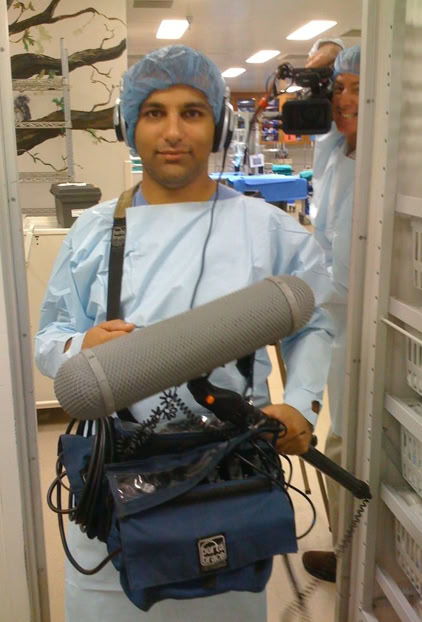
An operating room. On a ship. Off the coast of Africa.
I witnessed a cleft palate operation on board a ship that moves from port to port traveling the African coast, serving communities living well below the international poverty line. One of the surgeons was from my hometown in the UK. The other was a Beverly Hills plastic surgeon who spends most of the year doing cosmetic procedures for the wealthy — and three months a year volunteering his skills for people who genuinely need life-changing surgery just to be able to earn a living.
A kind of modern-day Robin Hood.
You might catch thirty seconds of a story like that in the final ‘feel good story’ on the local news.
I got to watch it unfold in real time, in an operating room, on a ship.
I guarantee I would never have such a unique and meaningful experience on Carnival Cruise to the Bahamas.
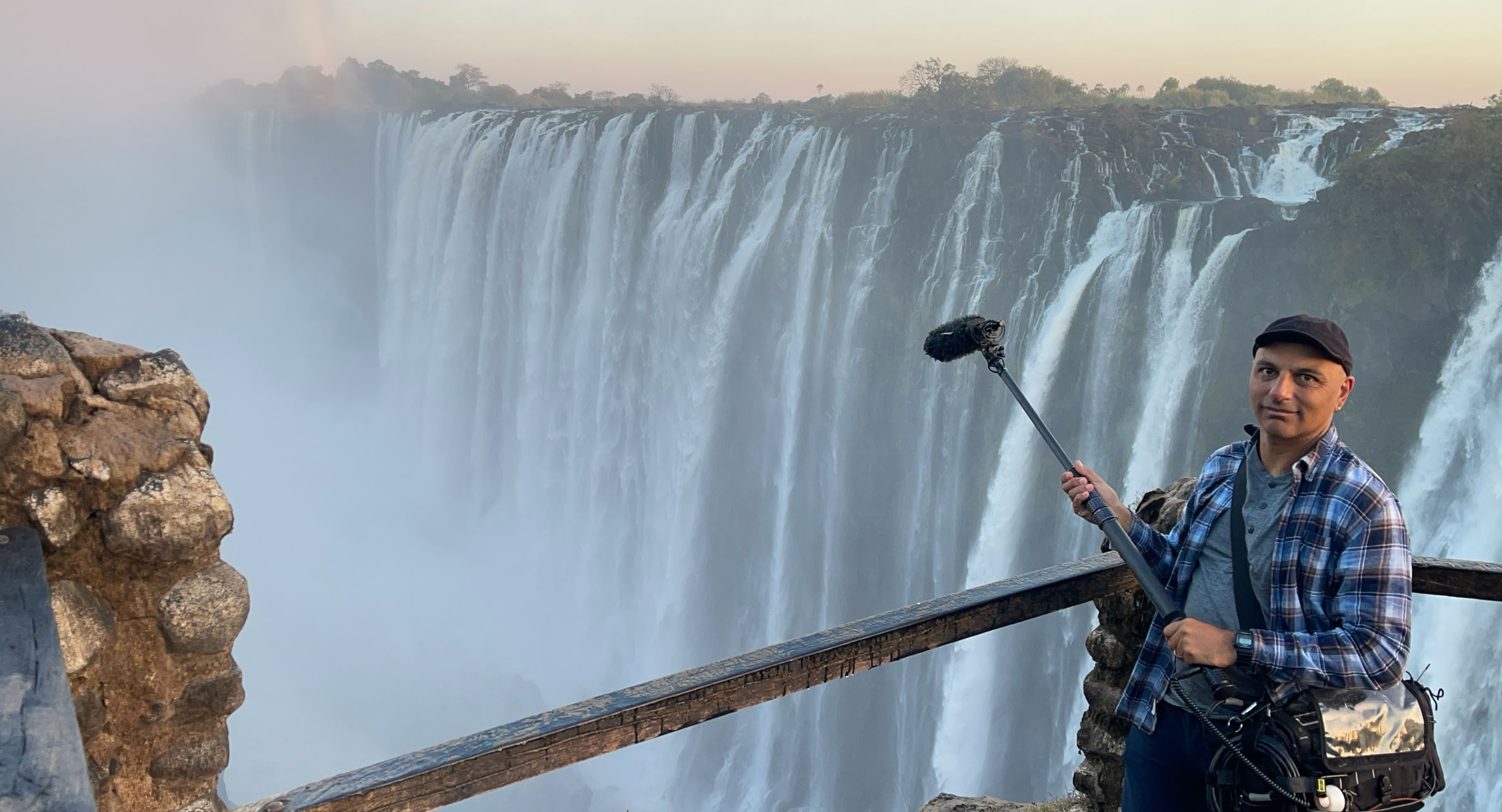
Victoria Falls. The Zambezi River. Zambia.
We'd been filming the work of a nonprofit building health and education projects in rural communities — meaningful work, long hours, challenging conditions, worthy of its own blog post by itself . At the end of the shoot we had B-roll days.
Those days were somewhat more chill.
On one of those days, I stood at the mighty Victoria Falls.
On another, I spent an afternoon on a river safari on the Zambezi.
I was recording ambient sound, so technically I was working. But I was also experiencing every bit of it, the crocodiles, the hippos, all kinds of unique wildlife.
Our hotel had zebras, giraffes, and impalas wandering through the grounds. An African safari is one of those experiences many save for a lifetime to enjoy.
But for me, it was just a day at the office.
Because in the end, it is work, and a job is a job
I could keep going. This list barely scratches the surface, and even the few examples I’ve shared all have a bigger story that could be their own individual blog posts. Maybe my wife is onto something when she says I should write that book.
But I'm not writing this to make my life sound glamorous — because the glamour, when it exists, is always surrounded by the reality of the job. Early calls. Long days. Challenging conditions. Problem-solving under pressure.
And then there is the time away from the people I love most, I’m often living experiences that I genuinely wish I could share with them rather than just report back, but productions aren't paying me to go on vacation.
They're paying me to do a job.
And a lot of shoots are entirely routine — a sound stage, a corporate interview, a green screen commercial. That's part of the work too, and I approach every single one of those days with exactly the same professionalism that I bring to a Zambian river safari or a police helicopter.
Because whatever the location, my role is always the same.
I'm there to serve someone else's story.
To help tell it clearly, and well.
The extraordinary experiences I've been lucky enough to have only exist because someone trusted me to be there — to do my part in bringing that story to a wider audience.
The uncertainty, the hustle, the cash flow that makes financial planners cry?
I'll take all of it.
Because the life that comes with this work is one that most people will never get to live.
And I'm genuinely grateful for that.
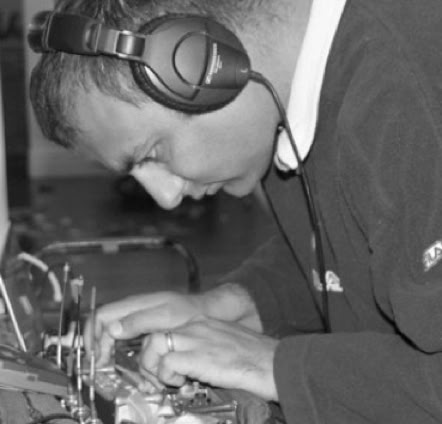
Martin Kittappa is an Emmy nominated production sound mixer and certified drone pilot with 20+ years experience working on film and TV productions around the world. A self proclaimed tech nerd. Lover of heavy metal music an avid runner, cyclist and a moderately good skier You can also check out out his YouTube Channel ‘The Full Later life’
26.2 Miles
Between Takes
48 Hours
© Martin Kittappa Production Sound 2026