Why I Said Yes to a Timed Film Competition Again
Last weekend I worked on one of those 48 hour film competitions.
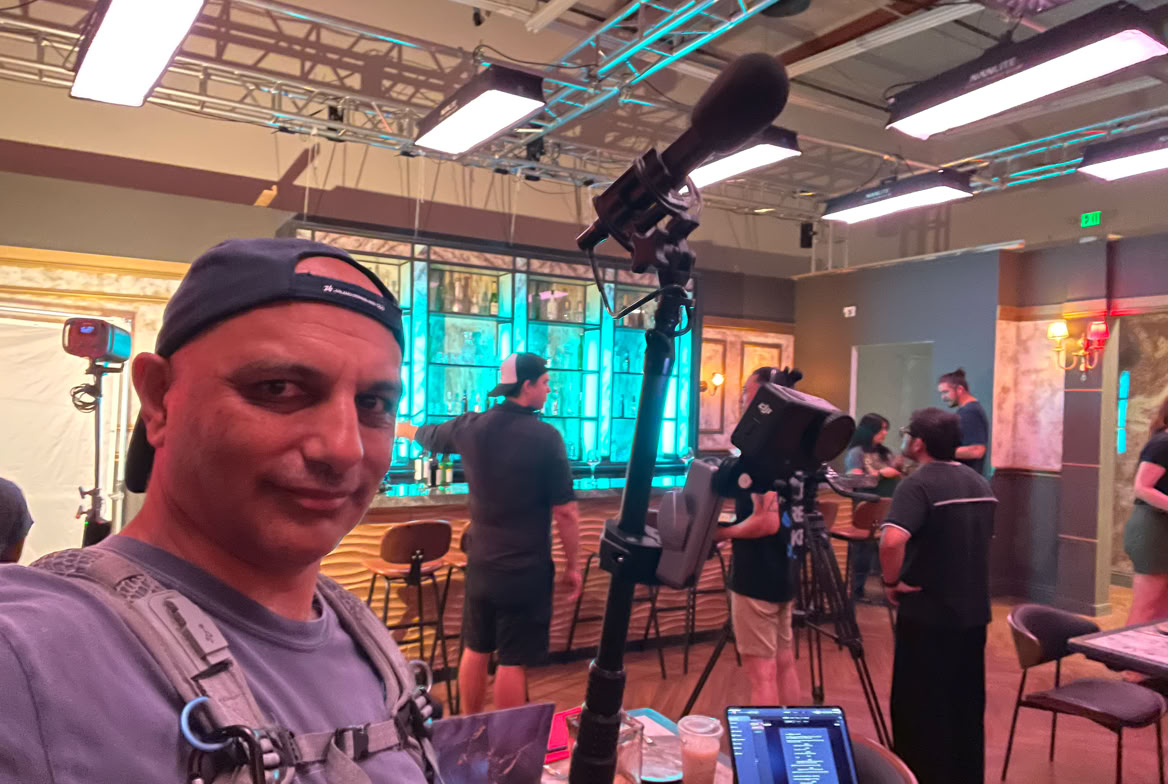
These days I don't usually sign up for this kind of thing. But last year I boom operated for a friend who was mixing one, and this year he wasn't available. The guys who run the production company called me directly, and so I figured why not.
So there I was again, bag on, headphones on, watching the clock.
A Quick History of Punishing Myself for Fun
This isn't my first rodeo.
Years ago I did a few of these. There was the 168 Film Festival, run by a Christian non profit, where each team is handed a Bible verse and given one week — 168 hours — to turn it into a film. By some combination of luck and good company, I ended up on the winning team three years running. I'd love to claim that was down to my mixing, but the truth is I kept finding myself attached to teams who knew how to tell a story properly and had the discipline to pull it off inside the time limit. That's a pattern I've paid attention to ever since.
Then there's the 48 Hour Film Project, which has been running for 25 years now. I did a couple of those back in the day. I even did a 24 hour competition when I first landed in LA and was looking to meet anyone who owned a camera and had a plan.
At that point I was hungry. Desperate, even, to build connections in this business. And I'm not knocking it — I met people on those competitions who I still work with today. That's not nothing.
But my honest memory of them is this: high energy, high intensity, brutally long hours, and total exhaustion. By the end the cast and crew are delirious. Your sense of time and space goes sideways in a way that feels like jet lag, except you haven't been on a nice holiday halfway around the planet to earn it.
On top of that, most of these competitions have rules stating crew cannot be paid. As the sound mixer with equipment I'm at least allowed to charge a rental rate for gear, but the number on offer is usually well below what I'd expect from a regular client.

When Free Work Makes Sense — And When It Stops Making Sense
I get the argument for working for free early on. Short films are the closest thing our industry has to an internship. Real internships at major studios are hard to find, and ones that actually put you on set are rarer still. So volunteering on low budget projects is often the only route to genuine on set experience.
At this stage in my career, though, another short film credit isn't going to move the needle. I have extensive credits on network television and actual features. What I'd be spending is time — and time is the one thing I can't rent out twice.
There's also a part of this that has nothing to do with credits.
I love my job. I've built a whole life around it and I'd do it again tomorrow. But I also love my life outside of work — time with my wife, and getting out on the bike on a good morning when the roads are empty and my phone stays in my pocket. Those things aren't a consolation prize for the days I'm not on set. They're the point.
Most mechanics love cars. It's why they became mechanics. That doesn't mean they'll tune your engine for free on a Saturday, because the reason they got good at it in the first place was to build a life — and a life needs weekends in it. Same deal here. I get paid to do the work so that I can afford to have days where I don’t have to work and enjoy life- That carbon fiber road bike I bought. I mean what’s the point in buying a nice bike if I don’t make the time to ride it?
Giving away a weekend is a real cost, a day that I can’t spend with family and friends or missing a group ride with my cycling buddies
So for the most part I was done. Done busting my buns and putting myself through the wringer for a project that will realistically be seen once, on screening night, and then live quietly on a hard drive, or some obscure YouTube channel. With that kind of time crunch, it's highly unlikely the film gets refined enough to play the major festivals, or to work as a viable pitch pilot for a feature or a series. A lot of work for very little reward.
Several years ago I simply stopped answering the crew calls for these things.
The Real Problem Isn't the Clock
Here's the thing I've come to believe: the 48 hours isn't what breaks people. Ambition is.
The reason working on these competitions can feel like going ten rounds with Tyson Fury is that teams try to do far too much. Multiple company moves across the city. Complicated lighting setups. Elaborate camera moves. Dialogue for days. All squeezed into a window that barely allows for a lunch break.
Packing up gear and driving to a new location takes time. Complex camera moves need rehearsals, and rehearsals eat your 48 hours faster than anything else.
And don't assume that a 48 hour delivery means a short shoot day so post can breathe. On the first one of these I ever did, we handed off footage and audio files as we went and kept shooting while the edit was already running — for close to 20 hours straight on day one. Then we came back on day two for a pickup scene while the music was being composed.
It was a genuinely brutal schedule. A great story to tell at wrap drinks, and it left a few scars, but not something I'd volunteer to relive.
Commercial Discipline Applied to a Short Film
This year's team was different, and the difference was in the planning.
Their main client base is commercials. Quick turnarounds, single locations, tight workflows — that's their normal week. So rather than reinventing the process for a competition, they ran their usual commercial playbook and simply pointed it at a 5 to 10 minute short instead of a 30 second spot.
One controlled location. Storytelling doing the heavy lifting instead of shock and awe visuals demanding complicated camera and lighting. The result was a day no longer than any regular working day.
From my side of the cart it really was just a normal shoot. Seven or eight pages of dialogue heavy script is a solid day, but it's nowhere near my heaviest. My record was a faith based low budget feature that ran a 16 page day. That was not pleasant. Honestly, the toll on the actors was worse than on me, though my poor boom op finished most of her days with arms like overcooked spaghetti.
I still don't know how actors hold a character and deliver real emotion across that many setups and that much dialogue. As the sound mixer I hear every word of it, and by the end of that day you could hear the fatigue creeping in. But I digress.
Respecting the Clock and the Crew
The reason this 48 hour experience was so different from my earlier ones came down to one thing: this team understood the limits of what can actually be achieved in 48 hours, and they built their day around respecting crew time — which matters even more when nobody is being financially compensated beyond gear rental.
We didn't hit overtime, not that overtime is relevant on a no pay project as 2x0 is still zero when it comes to the hourly rate, but no matter, we made our day within a normal work day.
They were also a group of professional creators working with talented actors who knew exactly what they were doing. Both projects — last year as boom op for my friend, and this year as mixer — were shot in a single location with a manageable number of setups.
When I came back to do that first one, I braced myself for a weekend of no sleep and a week of recovery. Instead it turned out to be fun. Great people, real creative energy, the kind of atmosphere that's the reason most of us got into this industry in the first place.
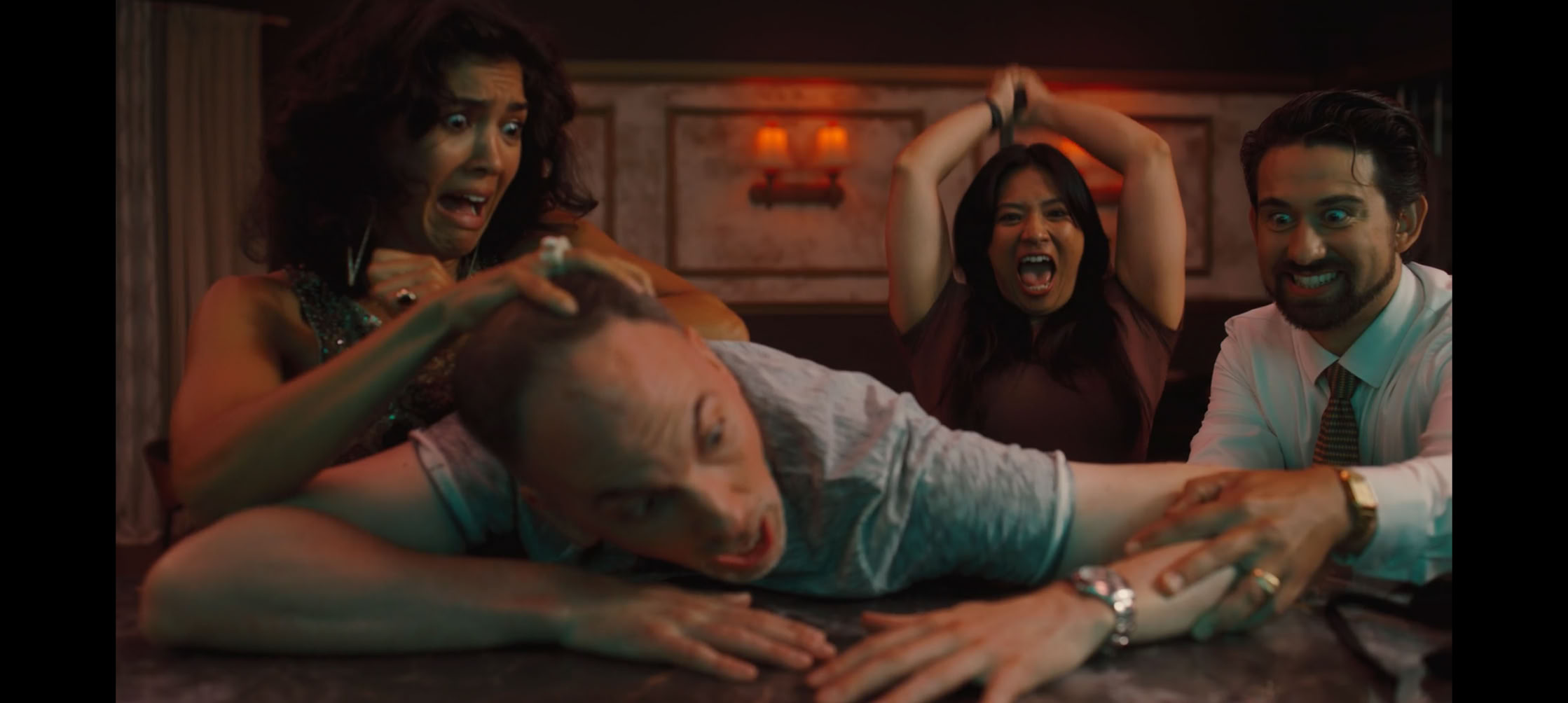
So I signed up again this year for their 48 hour film, Pour Company — a dark comedy with a terrific crew and seriously talented cast.
Because 48 hour filmmaking is such a collaborative scramble, I even pitched a shot that made it into the final picture. I'd normally never step into the creative side of things on someone else’s vision, , but ideas were being actively encouraged, so I offered one up. Seeing it in the finished film was a nice bonus.
Would I Do It Again?
Maybe. But selectively.
If the team I've worked with these last two years calls and I'm available, absolutely — no hesitation. I'd happily work with anyone who brings the same ethic around creativity and crew respect.
What I won't be doing is answering random ads on the forums. I've done my time in the chaotic version of this, and I don't need to come out the other side of a weekend needing a Hawaiian spa vacation to recover.
Good planning isn't the enemy of creativity. On a 48 hour film it's the only thing that makes creativity possible at all.
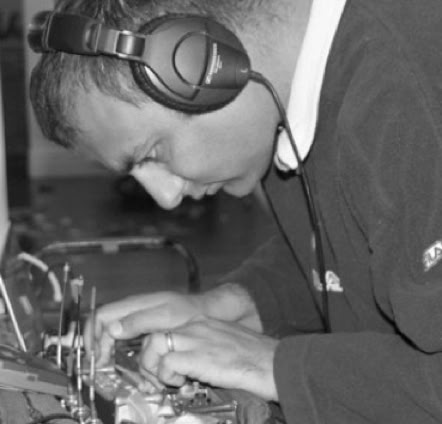
Martin Kittappa is an Emmy nominated production sound mixer and certified drone pilot with 20+ years experience working on film and TV productions around the world. A self proclaimed tech nerd. Lover of heavy metal music an avid runner, cyclist and a moderately good skier You can also check out out his YouTube Channel ‘The Full Later life’
Unexpected Adventures of Crew Life

© Martin Kittappa Production Sound 2026