It’s 4:30 AM. My phone flashes and beeps — but I’m already awake.
I never sleep well before an early flight. This time I’m booked out of LAX at 8:30 AM for a three-day documentary shoot in Jacksonville, Florida. Early flights are standard for this client. And honestly, it makes perfect sense. If delays or cancellations happen, there’s usually another option later in the day. When you’re traveling for production, you’re not heading off on vacation — you’re flying to work. We fly, we shoot, we go home.
An 8:30 departure is actually civilized by industry standards. Being booked on the first flight out — the ones that leave before most people have had coffee — is far from unusual.
But unlike a leisure trip with a single backpack, filming travel means gear. Lots of gear.
Packing for a Documentary Shoot
For documentary-style productions, efficiency is everything. Over time, I’ve refined my kit down to a single beige Pelican 1560 flight case. Beige — or “desert sand” — wasn’t a random choice. Walk through LAX on any given morning and you’ll see a parade of black flight cases. Mine stands out immediately on the baggage carousel, which is surprisingly useful when you’re juggling multiple pieces of equipment.
My Sound Devices 833 mixer is compact enough to qualify as a personal item, and my Peak Design travel backpack handles my personal essentials.
One of the small logistical puzzles of film travel is deciding what not to bring. Anything I know I definitely won’t need I’ll remove the day before travel, because space and weight are premium when you are on the move. For sit-down interviews, A regular C-Stand is too cumbersome to travel with and so I use a lightweight Matthews stand to support my boom mic. However, bringing it myself would mean checking an additional case — another baggage fee, another item to track, another piece of Tetris to fit into the rental minivan.
So I ask one of the camera operators if they have room.
“I’ll just bring an extra stand for you.”
Result.
(With the silent hope they actually remember.)
One-Bag Travel, Film Crew Edition
Years of travel have made me borderline obsessive about packing. The same principles that apply to my minimalist personal travel approach work beautifully for production life.
Merino wool clothing packs small and handles a wide range of climates. Lululemon ABC pants instead of bulky denim. A hoodie — because film sets, airplanes, and hotel conference rooms are often inexplicably cold.
I’m also an avid runner, so running shoes are non-negotiable. Even on tight schedules, there’s always optimism that I’ll squeeze in a quick run between call times.
Jacksonville promised warm, wet weather. Lightweight rain jacket. Done.
The Lithium Battery Shuffle
Film travel adds one critical complication: lithium batteries.
Any lithium power packs must come out of the checked flight case and into my carry-on backpack. That means hauling IDX lithium batteries for the mixer along with stacks of AA Ultimate lithiums for wireless mics and camera hops.
Aside from the added weight, batteries often trigger inspections — especially at smaller regional airports. LAX security staff are accustomed to film crews. In smaller cities, though, battery-filled backpacks tend to raise eyebrows.
These inspections usually turn into friendly conversations.
“Anyone famous in town?”
Most of the time, I have to disappoint them. And even when there is someone notable involved, NDAs ensure I couldn’t say a word anyway.
Why Film Crews Always Arrive Early
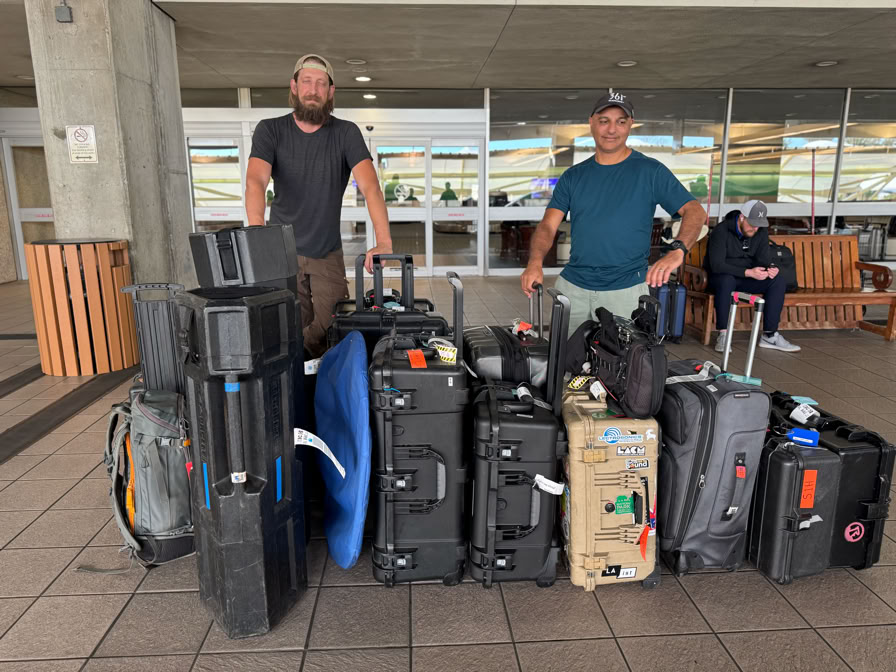
With equipment cases to check, we always arrive at the airport early. Painfully early.
For domestic flights, airlines typically offer media rates for professional equipment. In theory, this prevents excess charges for overweight cases. In practice? The outbound and inbound fees sometimes differ for reasons known only to airline accounting systems.
It’s one of those mysteries seasoned crew members learn not to fight. Expense reports exist for a reason.
Check-in agents often request a media pass. As a freelancer bouncing between productions, I don’t have a permanent network credential. Instead, like many independent crew members, I carry a professional-looking pass that I created specifically for this purpose.
The agents don’t need a biography — they just need something that looks official.
The stack of flight cases usually does the rest.
A Small but Important Travel Tip
When asked what’s inside the cases, there is only one correct answer:
“Film equipment.”
Never, under any circumstances, say “shotgun mic.”
Trust me on this one.
Security cleared, and time is on our side
With call time effectively starting the moment we hit the airport, breakfast technically falls under production expenses. Now, anyone who’s eaten at an airport restaurant knows how quickly a simple meal can turn into a line item worthy of its own budget meeting. Fortunately, I have Delta lounge access, and even covering entry for the two camera guys usually works out cheaper for the company than three overpriced Eggs Benedicts in a crowded, noisy terminal café.
Productions — and this client especially — take great care of their crew, but I’ve always believed in keeping expenses sensible. The lounge is the perfect middle ground: decent food, a calmer environment, and yes, the bar is open if someone feels like a celebratory mimosa. For me, though, it’s coffee, breakfast, and professionalism. Still, being the person with lounge access is one of those small, unsung perks that quietly boosts crew morale before a long travel day.
The Carry-On Anxiety Every Sound Mixer Knows
The biggest fear on a full flight?
Being forced to gate-check a carry-on bag filled with lithium batteries.
Since those can’t be checked, the strategy is simple: arrive early, board early, and claim overhead bin space like it’s prime real estate. It’s not just about protecting expensive equipment — it’s also about not creating unnecessary chaos during boarding. Flight attendants already have enough to manage without someone suddenly explaining why their bag absolutely, definitely cannot go in the hold.
A little preparation on our end helps everything run smoother for everyone involved.
Arrival: The Baggage Carousel Lottery
Two in-flight movies and a couple of ginger ales later, we land in Jacksonville.
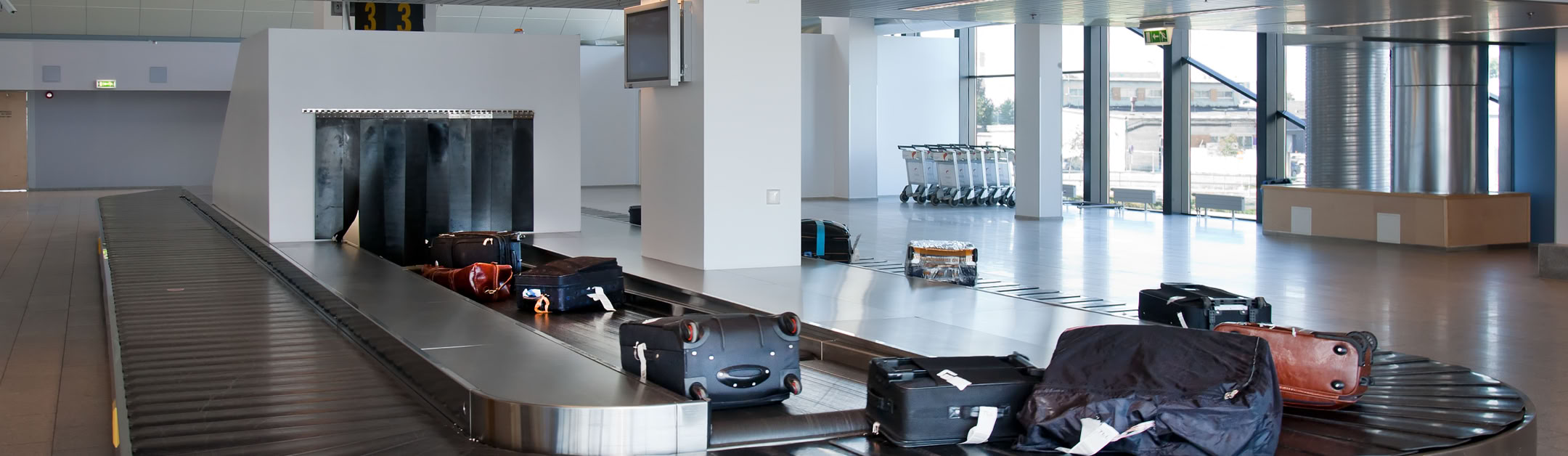
Checked cases follow no predictable logic. Sometimes everything appears neatly on the carousel. Sometimes it’s split between standard baggage and oversized. And always — always — there’s the quiet dread that something didn’t make the trip.
Missing gear is the stuff of production nightmares.
This is precisely why I always carry on my mixer/recorder along with at least two wireless mic kits. If the worst happens and cases go wandering somewhere between airports, I still have a functional sound package with me. It may not be the full rig, but it’s enough to keep production moving — allowing us to shoot interviews or essential material while we wait for missing gear to arrive or someone makes a dash to the nearest rental house.
Because in production, delays cost far more than inconvenience.
Fortunately, this trip went the way most do: smoothly.
Because film travel, much like production sound itself, is about controlling what you can, preparing for what you can’t, and building enough buffer into the schedule that small problems never become catastrophic ones.
And the stories about when that doesn’t happen?
Those are for another post.
Martin Kittappa is an Emmy nominated production sound mixer and certified drone pilot with 20+ years experience working on film and TV productions around the world. A self proclaimed tech nerd. Lover of heavy metal music an avid runner, cyclist and a moderately good skier You can also check out out his YouTube Channel ‘The Full Later life’
Capturing Sensitive Stories
© Martin Kittappa Production Sound 2026